
Skin Cancer & Precancerous Lesions
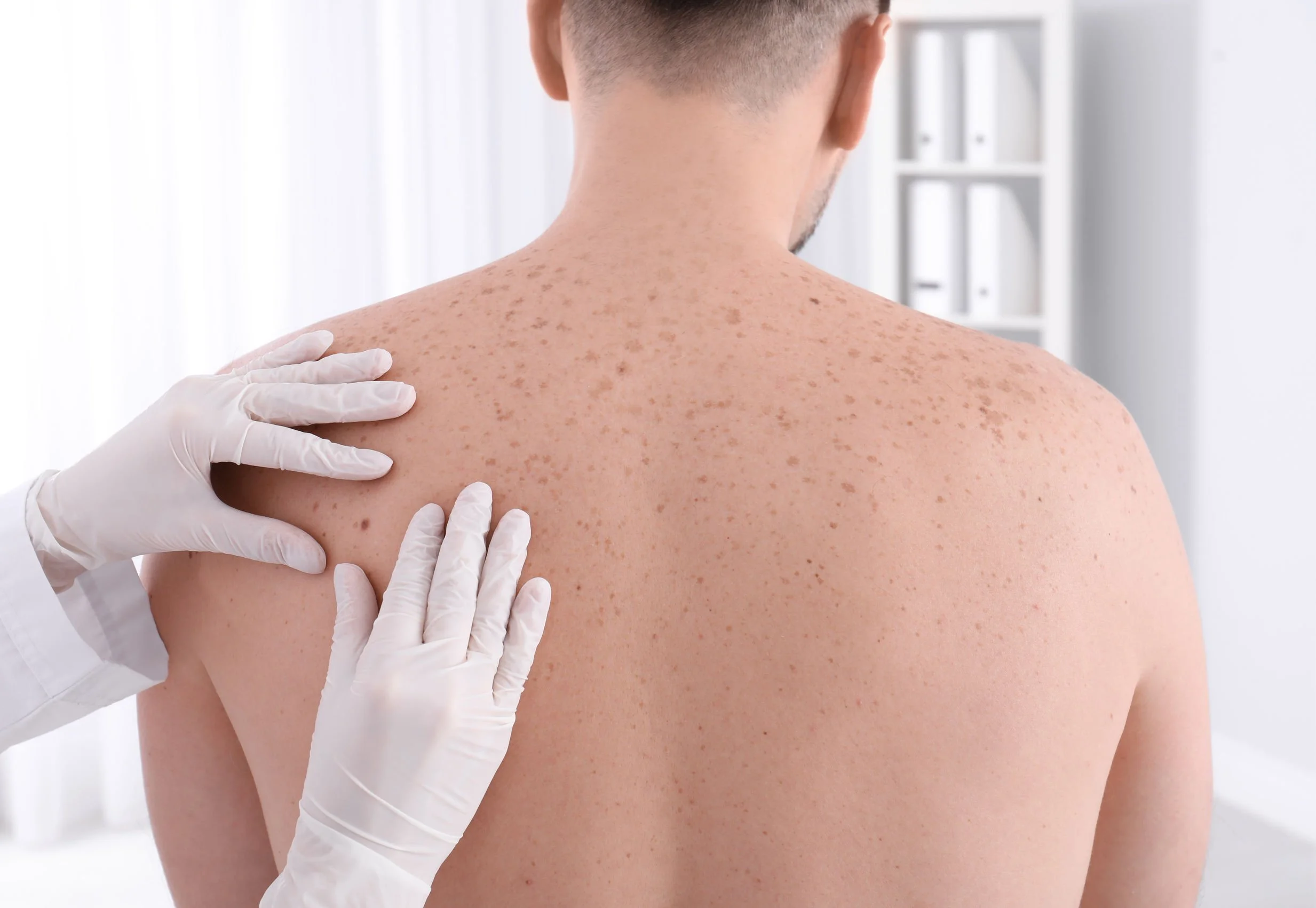
Skin cancer is the most common form of cancer in the United States, affecting over one million Americans each year. The leading cause is overexposure to sunlight or tanning, especially when it leads to blistering burns. Additional risk factors include frequent X-ray exposure, scarring from burns or disease, chemical exposure (coal, arsenic), and family history.
Individuals with fair skin who burn easily are at the highest risk and should use broad-spectrum sunscreen (SPF 30 or higher) daily to prevent UV damage.
Major Types of Skin Cancer
-
The most common and least aggressive form of skin cancer
Appears as a pearly, flesh-colored bump—often on the head, neck, or hands
Can bleed, crust, and recur if untreated
Rare among darker skin tones
-
Presents as red, scaly patches or raised lesions on the ears, face, lips, or mouth
More likely to occur in fair-skinned individuals
Can spread if ignored, but has a 95% cure rate when treated early
-
The deadliest form of skin cancer
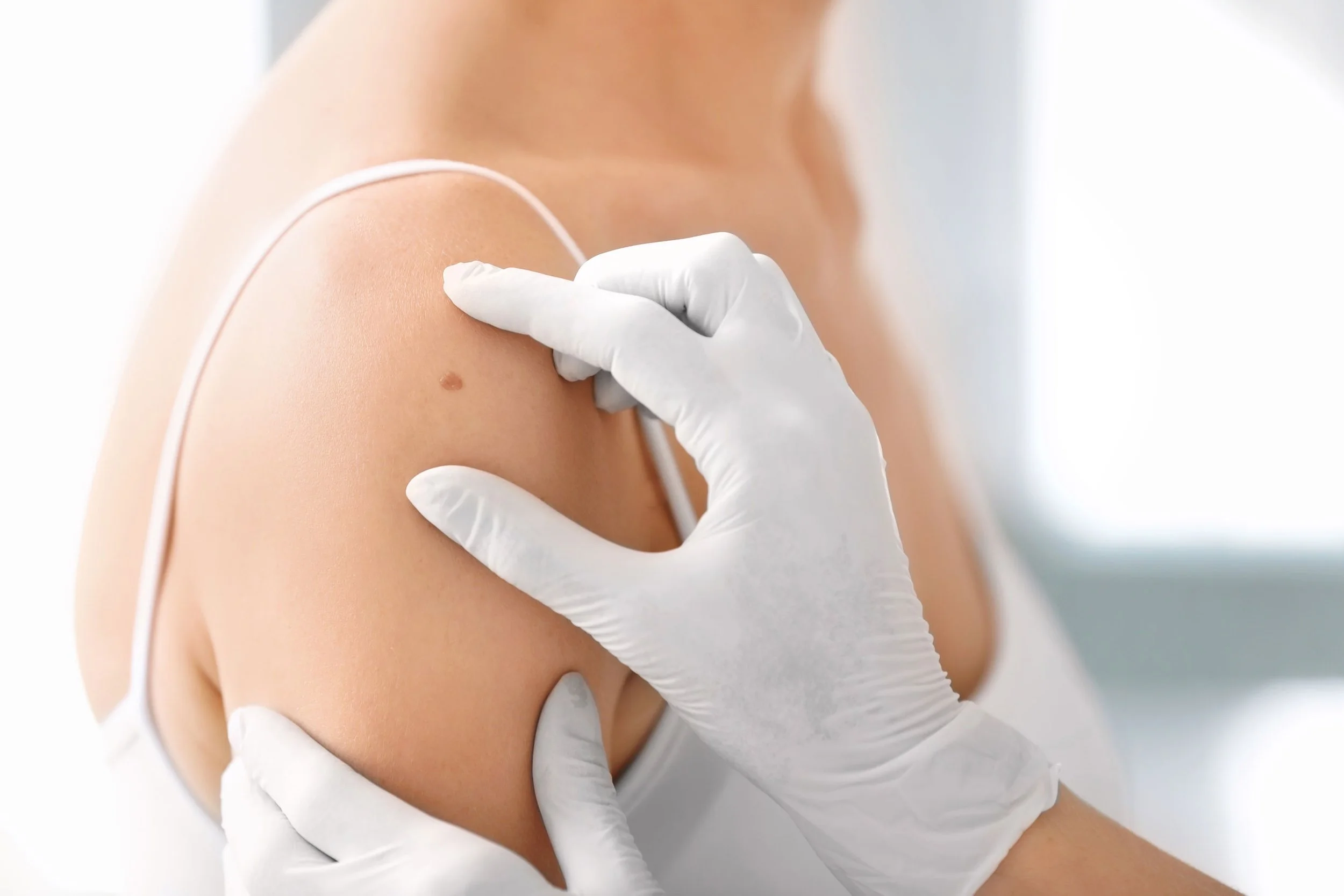
Often appears as an asymmetric mole with irregular borders and uneven pigmentation (brown, black, or mixed tones)
Early detection is critical—any changing or enlarging mole should be examined immediately

A - Asymmetry
Benign moles are symmetrical; cancerous moles are usually asymmetrical meaning, if you draw a line down the middle, the two halves will not match.
B - Border
Cancerous moles usually have irregular borders that can be jagged, ragged, spotty, or blurred into the surrounding skin.
C - Color
Cancerous moles have irregular color and may include hues of brown, black, tan, or even patches of white, red, pink, or blue
D - Diameter
Melanomas typically have a diameter of greater than 6mm or 1/4 inch, though some may be detectable at even smaller diameters.
E - Evolution
Cancerous moles will change shape, size, texture, or color over weeks or months and may start to itch with time.
The ABC’s of Skin Cancer
Performing self-exams and checking your moles monthly can help detect early changes that may be cancerous. If you notice any new, developing, or unusual changes that you suspect may be cancerous, contact your dermatologist immediately.
Diagnosis & Treatment
At MD Claiborne Dermatology, our board-certified dermatologists provide expert skin cancer screenings and advanced treatment options, including:
Surgical excision with precision closure
Mohs micrographic surgery for tissue-sparing removal of facial or complex lesions
Superficial radiation therapy for select cases
Topical chemotherapy for noninvasive cancers
Routine skin checks are your best defense against skin cancer.